Skin
Copper peptide skin studies with GHK-Cu
A busier fibroblast is an intriguing beginning. My skin questions concern the tissue above it: its density, its surface and the barrier that the preparation had to cross.
The collagen comparison
The 2015 skin-regeneration review reports increased collagen production in 70% of women treated with GHK-Cu, compared with 50% for vitamin C and 40% for retinoic acid. These percentages count women whose collagen production increased. They do not measure the size of a wrinkle reduction.
The same review describes placebo-controlled findings on firmness, density, skin laxity and wrinkle depth. Those outcomes speak more directly to the appearance and feel of skin than the original cell experiments do, although the human studies were small and predominantly topical.
I welcome the effort to measure several skin properties together. The temptation to promote the largest percentage as a single verdict on the ingredient seems much less interesting than the differences among those properties.
Copper peptide vs retinol
The comparison above used retinoic acid. Retinol is another vitamin A ingredient, and substituting its name changes the claim. The 2025 anti-wrinkle review repeats the collagen comparison and discusses the limited direct clinical comparisons.
For me, the percentages justify interest in GHK-Cu’s effect on collagen. They leave the broader contest between skin ingredients open: visible results, irritation and the preparation itself would all need attention. Retinoic acid’s figure cannot stand in for every retinol cream.
Human skin in a diffusion cell
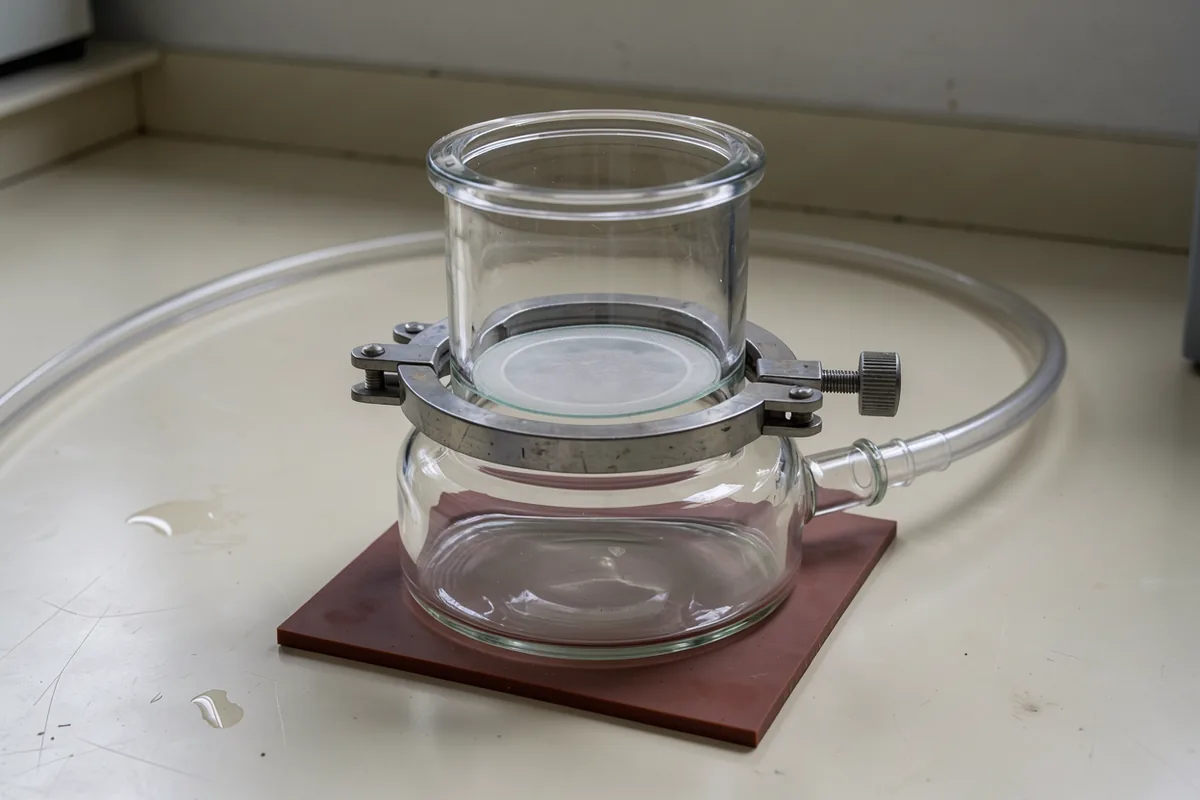
A 2011 experiment with human skin outside the body measured copper applied as a copper tripeptide. Over 48 hours, 136.2 ± 17.5 micrograms per square centimetre permeated dermatomed skin, and 97 ± 6.6 micrograms per square centimetre remained as a dermal depot. The measured material was copper.
That distinction changes how I picture the result. A copper depot records metal retained in skin; the experiment did not follow a cream user’s wrinkles or measure intact peptide throughout a living body. Different skin layers also present different barriers.
The 2025 delivery review describes free GHK as strongly water-loving, with poor passive passage through the outer skin layer. Formulation work explores lipid carriers, chemical modifications and other ways around that obstacle. The concentration on a label gives only part of the exposure story.
Acidity in topical preparations
The formulation review describes how strongly acidic conditions and ascorbic acid can destabilise the copper complex. A cream contains a chemical environment as well as an ingredient list. GHK-Cu’s behaviour depends on that environment.
This is a formulation problem, with no mixing recipe offered here. Community complaints about irritation while combining products add questions, but the accounts remain anecdotal and cannot establish which ingredient caused the reaction. The safety discussion sets out the reported problems.
When does skin tighten?
The personal accounts mention improved texture within weeks and firmer skin around 2 to 3 months. Those are anecdotal reports, not clinical evidence for a reliable timetable. Their appeal is easy to understand: a date feels more useful than a description of fibroblasts.
The 48-hour copper measurement answers a different question about material passing into or through excised skin. An appointment with firmer skin would demand a much better clock, to my mind. A useful timing study would need to follow the visible or functional change it claims to predict.