Hair
Copper peptide hair growth with GHK-Cu
A counted hair is refreshingly concrete. The complication in the strongest human trial is the preparation: GHK shared it with another ingredient.
The scalp preparation
The 2016 randomised hair-growth trial followed 45 men with androgenetic alopecia over 6 months. The topical preparation combined 5-aminolevulinic acid with GHK. It tested a combination containing free GHK, rather than GHK-Cu alone.
Reported hair-count gains were 52.6 at 100 mg/mL and 71.5 at 50 mg/mL, compared with 9.6 for placebo. These strengths describe the tested preparation. No adverse events were reported in any group during the trial.
My applause goes to the tested combination. Assigning that credit between its ingredients requires another experiment. Nor can the reported counts, without the counted area alongside them here, settle how much a whole scalp’s appearance would change.
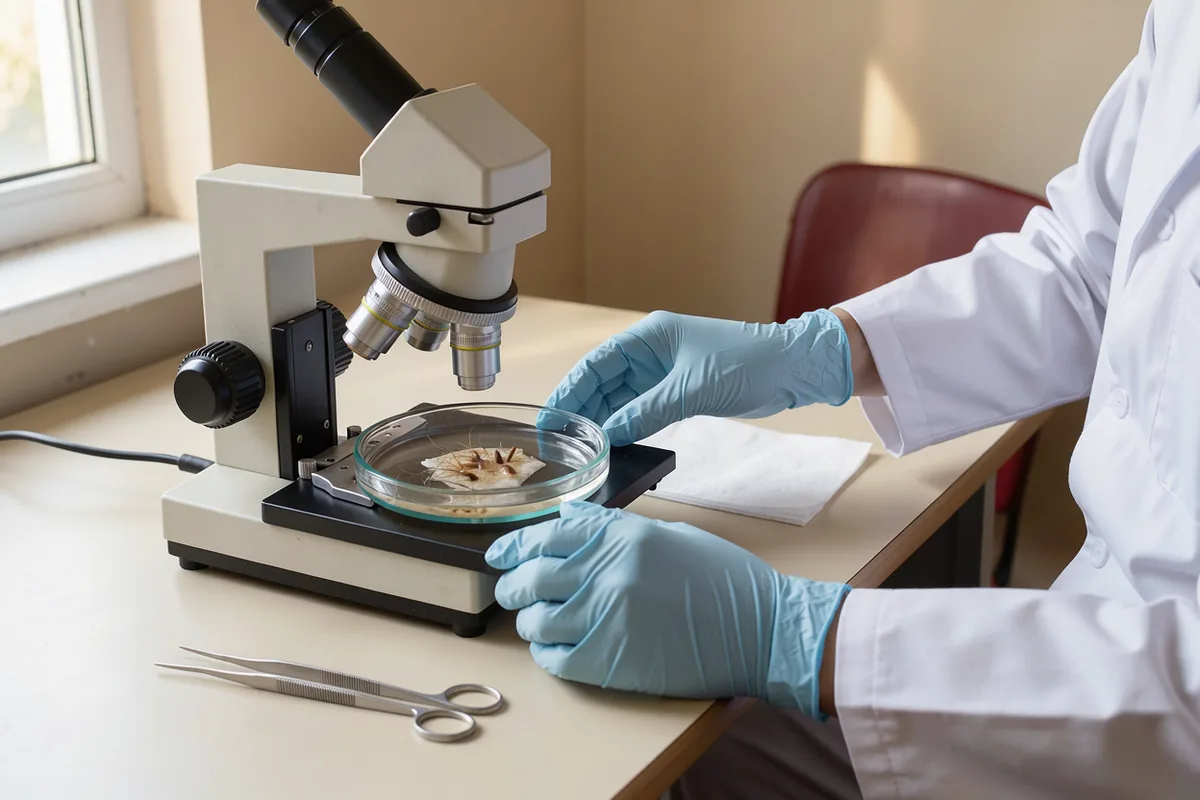
Does copper peptide regrow hair?
There is a human signal for the GHK-containing combination. For GHK-Cu on its own, the controlled human evidence remains limited. A 1991 study in C3H mice found follicle-stimulating activity from peptide-copper complexes, adding animal evidence to the broader story.
The 2026 short-peptide review discusses small-vessel growth and turnover of the material surrounding follicles. That proposed repair setting suits the wider copper-peptide literature. It still needs to connect with a clear human result for a defined GHK-Cu preparation.
Attribution bothers me here. Hair grows in the trial; the experiment leaves the separate contribution of GHK unsettled.
The regrowth clock
The human trial’s reported gains concern its 6-month assessment. That endpoint establishes when the comparison was made. It does not establish when an individual first noticed a change.
People describe regrowth around 3 months in community discussions. These are anecdotal accounts rather than clinically checked start dates. Other treatments often accompany scalp products in those accounts, which makes cause harder to assign.
Repeated measurements of a defined preparation’s developing effect would answer my timing question more convincingly. For now, the trial supports a result at its assessment point, with the early course left less clear.
Copper and hair-loss hormones
Blood supply, cell survival and supporting tissue are plausible experimental avenues. Those avenues can be investigated on their own terms while the hormone question remains open.