Medicinal GHK-Cu · The work of mending
A shrinking gel brings GHK-Cu into view
In a study of cells from aged mice, free GHK improved movement and collagen-gel contraction. I’m following the copper-peptide research for this physical work of mending.
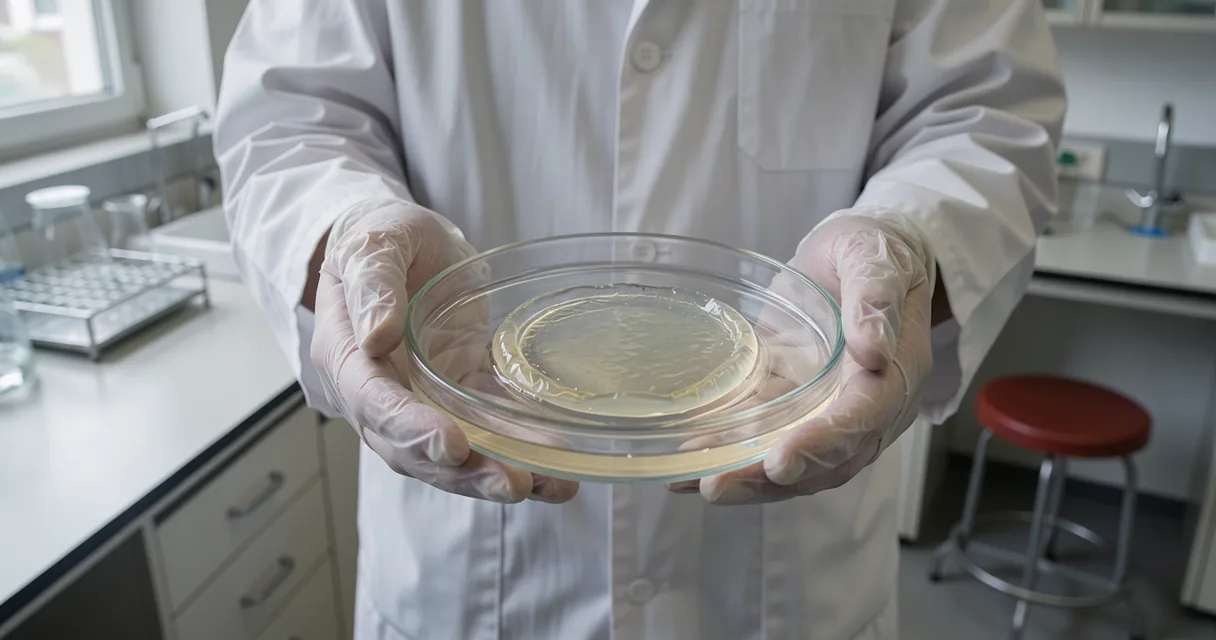
The collagen-gel experiment
A gel contracting in a dish sounds like a modest place to begin. I prefer it to the enormous word “rejuvenation.” In a 2024 experiment with fibroblasts from aged mice, free GHK improved the cells’ movement and their ability to contract a collagen gel. Fibroblasts are the cells that make and rearrange much of the supporting material around them. Here, they had a physical job to perform.
The experiment also found changes in markers associated with cellular ageing. But the movement interests me more: something happened beyond a promising molecular tally. The researchers proposed a role for integrin-beta1, a protein involved in how cells interact with their surroundings. That explanation remains a proposal.
The substance in this experiment was GHK without attached copper. The animals supplied the cells; the work happened in culture. Those particulars put a firm edge around the result. The contracting gel supplies a tangible repair task; human recovery remains a question for human studies.
GHK copper peptide and Copper Tripeptide-1
GHK consists of glycine, histidine and lysine, three linked amino acids. With copper attached, it becomes GHK-Cu, also called Copper Tripeptide-1 on cosmetic ingredient lists. The skin-regeneration review describes this small peptide and the supporting proteins it affects.
The distinction between free GHK and the copper peptide becomes especially useful in a fibroblast experiment on matrix turnover. GHK-Cu increased the matrix-degrading enzyme MMP-2 alongside proteins that restrain such enzymes. Free GHK did not reproduce that response. A tissue’s repair work includes dismantling as well as making; the form of the peptide can change which work appears.
“Medicinal” is the ambition I want examined here: whether those small jobs can eventually add up to useful healing. The word alone grants the compound no medical status.
Copper peptide benefits, at tissue scale
The 1988 collagen experiment found greater collagen production from human fibroblasts without an increase in cell number. I admire the finding’s economy. More output came from the cells already present.
Human skin studies ask about density, firmness and wrinkles. The copper peptide hair literature asks whether more hairs can be counted after treatment. The skin findings, hair counts, and laboratory work on repair give those questions very different settings.
A dressing containing modified GHK also accelerated wound healing in rats. That is closer to a wound than a gel assay, though it still leaves human scar fading unestablished. Following the result from gel to wound sharpens my demands on the next experiment.
From repair to a medical use
My reservations centre on the missing human exposure data, despite the impressive cell results. A rat plasma study of free GHK documented rapid breakdown into a smaller peptide. Human GHK-Cu clearance remains unmeasured well enough to supply a reliable half-life.
The study amounts page follows that practical gap. Safety and reported experiences covers irritation, pigmentation and the anecdotes that have accumulated around the creams. GHK-Cu has no approved therapeutic indication; its established real-world history is as a cosmetic ingredient. There is plenty here to investigate without calling the investigation finished.